
By Stanley Nwankwo
In our previous series – Understanding the Global Framework on refugees’ Rights and Why do People Flee Conflict and Persecution…, we were able to highlight the circumstances surrounding the growing concerns around immigration into the United Kingdom and the increased public debates bordering on refugees and asylum seekers in the state.
While these immigration challenges remain politically sensitive, government institutions, councils, charities, and volunteer organisations continue to support vulnerable individuals to rebuild their lives with dignity.
This piece, offers a historical perspective on how the United Kingdom has acted on both humanitarian ground and in consonance with the 1951 UN convention relating to the status of refugees and by extension, the protection of asylum seekers. Its aim is to reveal how the integration of this group of immigrants in the United Kingdom has continued to evolve through a combination of humanitarian programmes, local authority partnerships, and community-led support initiatives.
Historical Background
History is replete with how the United Kingdom has been responding to the settlement and integration of refugees and asylum seekers in different ways prior to the 1951 UN Convention.
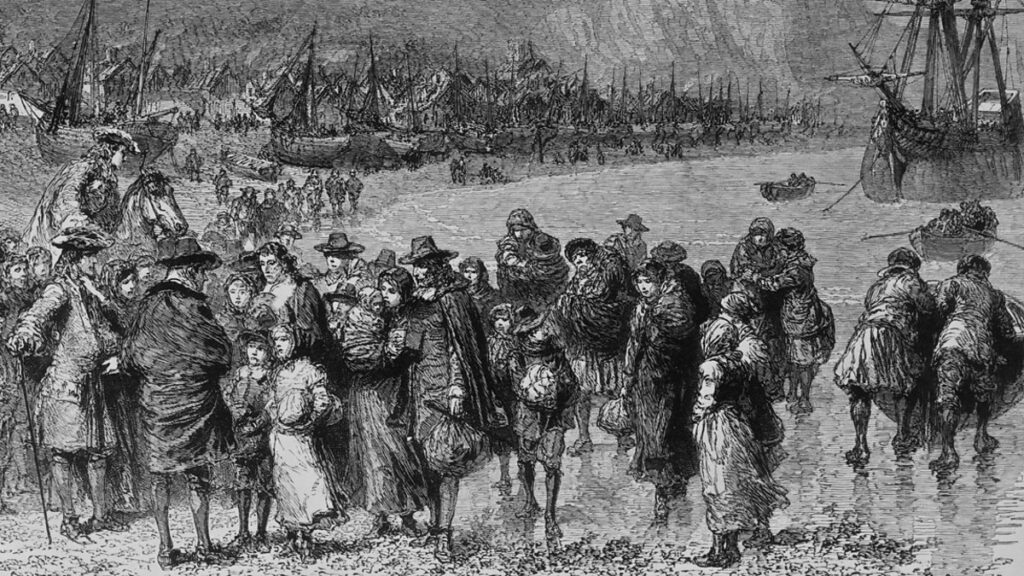
Available evidence reveals that from the Huguenots (French Protestants) who sought refuge in Britain on the basis of favourable religious environment in the seventeenth century, to the ‘New Scots’ integration model in recent times, the United Kingdom has shown to be a leading global figure in its approach towards the integration of forced immigrants who seek to settle within its borders.
Prior to the 1951 UN Convention on the statues of refugees, the 1905 Alien Act has been credited as the first legislation in the UK which contains a standardized definition of refugees and their rights to seek protection in Britain, defining who an ‘undesirable immigrant’ is, while also remarkably acknowledging the need to not refuse those who could prove that they are seeking admission into the country solely to avoid prosecution or punishment on religious or political grounds.
An ‘undesirable immigrant’ is someone who does not have the financial means to support themselves. Since its introduction in the 1905 Alien Act, it has been echoed in various visa categories in subsequent legislation up to present day.
Although the 1905 Alien Act has been widely criticized by scholars for restricting the entry of those it perceived as a burden on the state, broadly categorizing such individuals as someone who ‘does not have the means to support himself and, or their dependents;
And in alignment with the core principles of the 1951 UN convention – non-discrimination, non-penalization and non-refoulement aimed at protecting refugees, it was the Immigration Act 1971 that laid the groundwork for the modern immigration system that is in place in the UK today.
This Act provided for the issuance of work permits for specific jobs in a particular period; it also granted indefinite leave to remain to individuals already living in the UK for a certain period, allowing them to stay in the UK permanently without restrictions.
Through the principle of non-refoulement, the agreement holds that no state can expel or return a refugee to a territory where their life or freedom is in danger.
Factors that have influenced Britain’s Polices on Refugees and Asylum Seekers Up to the 1951 UN Convention on the Statues of Refugees:
Humanitarian Crisis and Moral Responsibility
Prior to the 1951 Refugee Convention, Britain has provided refuge to people fleeing persecution on moral and humanitarian grounds.
This can be seen in the migration of the French Revolution émigrés who enjoyed public and government support in Britain in the early 1790’s, culminating to the establishment of a committee for the relief of French refugee in other to adequately support these refugees, as such act was considered a national and patriotic responsibility at the time.
Similar reference to humanitarian concerns as part of what influenced refugee policies in Britain before international legal obligations were established could be traced to the Kindertransport program, where up to 10,000 children from Germany, Austria and Czechoslovakia, majority of whom were Jewish were relocated to Britain in order to escape persecution by the Nazi government, before and during World War II.
Economic and Labour Needs
Economic conditions have continued to influence Britain’s attitudes toward refugees. Policies which tend to favour refugees were often put in place, or strict processes for settlement in the state lifted in times of labour shortages. For instance, with the influx of the Huguenots into Britain in 1687, many of whom were skilled craftsmen, artisans and professionals, bringing in-demand skills relevant to the growth of the British economy with them.
This set of immigrants were largely accepted to the UK with little opposition, as the majority of the British population worked in the agricultural sector at the time, hence, there was little or no competition with the Huguenots except in places like the East London and Norwich, where the textile industry placed a natural resistance on immigrants.
Huguenots who came to Britain brought their skills and expertise as silk-weavers, silversmiths, merchants, vine-growers, wig makers, and hat-makers to the country, helping Britain to expand its global horizons.
In a more recent development, the UK’s membership of the European Union influenced its asylum policy for decades. In fact, some commentator have alluded to the ‘taking back control’ over immigration as one of the major reasons for Brexit. On the other hand, the Brexit has devolved some aspects of immigration policy into a liberal direction resulting to increased settlement, predicated upon the libralisation of work and study visas and the creation of humanitarian schemes. All, targeting to fill the labour vacuum created by Brexit.
International Legal Obligations
The 1951 UN Convention and the 1967 Protocol relating to the status of refugees, marks a remarkable influence in terms of global attitude towards asylum policies. These international instruments created the legal standards for refugee protection resulting to the UK’s commitment to safeguarding people fleeing persecution and have found themselves within its border.
The influence of these legal instruments are far-reaching, ranging from a growing number of post-colonial conflicts, the crumbling of the Soviet Union and then end of the Cold War. With all resulting to a shift in the nature of the refugee experience.
This period also saw increased Government participation and sponsorship of the arrival of refugees in groups.
In recent time, major conflicts in Syria, Afghanistan, and Ukraine have influenced British refugee policy, with persons from these nations settling in the UK under through government initiatives including the ‘New Scots’ integration program, with the Forth Valley Welcome continued support to the individuals involved.

Who are New Scots?
New Scot is a generic term used to identify people seeking asylum, those recognised as refugees and those with another protection status in Scotland.
It is an integrational framework designed to bring succor for people seeking protection in the United Kingdom. The idea for the adoption of this terminology as an integration strategy was borne out of the partnership between the Scottish Government, COSLA and the Scottish Refugee Council; working in concert with several other organisations across all sectors with a shared objective to support refugees who were forcibly displaced from their homes as a result of persecution, conflict, and human rights violations.
The term refugee is used to refer to anyone supported by the strategy, with an exception to where the need for a technical or legal distinction is imperative to make, especially as it concerns the rights of any individual or a group, and perhaps where failing to make such distinction could obscure the context in which the term is used.
How is Forth Valley Welcome Helping the New Scots and others?
Forth Valley Welcome, helps New Scots – refugees and people seeking asylum to build new lives in confidence, dignity, and a sense of belonging by providing practical support such as making essential household items available, clothing, and toys for families so they can feel at home from day one.
Our trained Home Visitors offer one-to-one guidance with everyday challenges, while our English language support helps people find their voice in their new community; through community events, employability support, and advocacy, we connect people, create opportunities, and amplify the issues that matter most to those we support; together, we’re building stronger, more inclusive communities across Stirling and Clackmannanshire.
While many New Scots and several other refugees across the country have continued to add value to their immediate community and to the British economy at large, there had been some recorded hostility towards these individuals by some persons who may have considered them a threat to their own livelihoods.
On our part at Forth Valley Welcome, we will continue to create public awareness and amplify the challenges that refugees face, not just in our society, but across many communities wherever they are found.

